Theatre



Interview
Backstage Pass: Are Ya Dancin’?
Following a sell out run in 3Olympia Theatre in 2024, 'Are Ya Dancin'? - A Show Band Story' bringing the sparkle, magic and spirit of 1960’s showband Ireland to the Gaiety Theatre this week, running until Saturday 13 June.
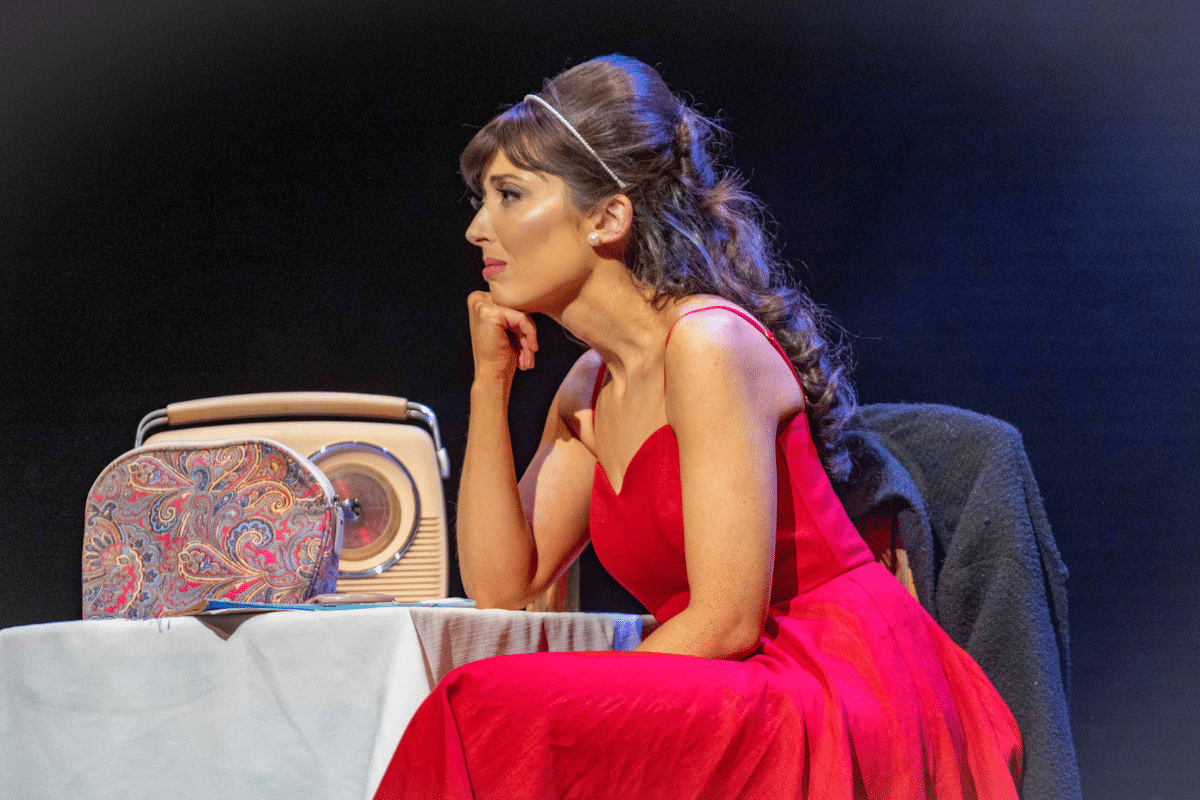
Set in Donegal during the golden age of Irish music, ‘Are Ya Dancin’?’ follows Tommy O’Neill, a young musician whose rise to fame is overshadowed by the challenges of a changing society. As the country begins to find its rhythm, Tommy must navigate ambition, love and loss.
We caught up with writer, producers and actors Carol Gleeson and Helen Spring to talk showbands, societal changes and busy theatre days.
Can you introduce yourselves and tell us what your involvement is with the show?
Helen: My name is Helen Spring, and I am co-writer, co-producer, and an actress in the show ‘Are Ya Dancin’?’.
Carol: I am Carol Gleeson, and the other co-writer, co-producer, and co-actor in ‘Are Ya Dancin’? – A Showband Story’.
What would you tell someone about ‘Are Ya Dancin?’ who doesn’t know anything about it?
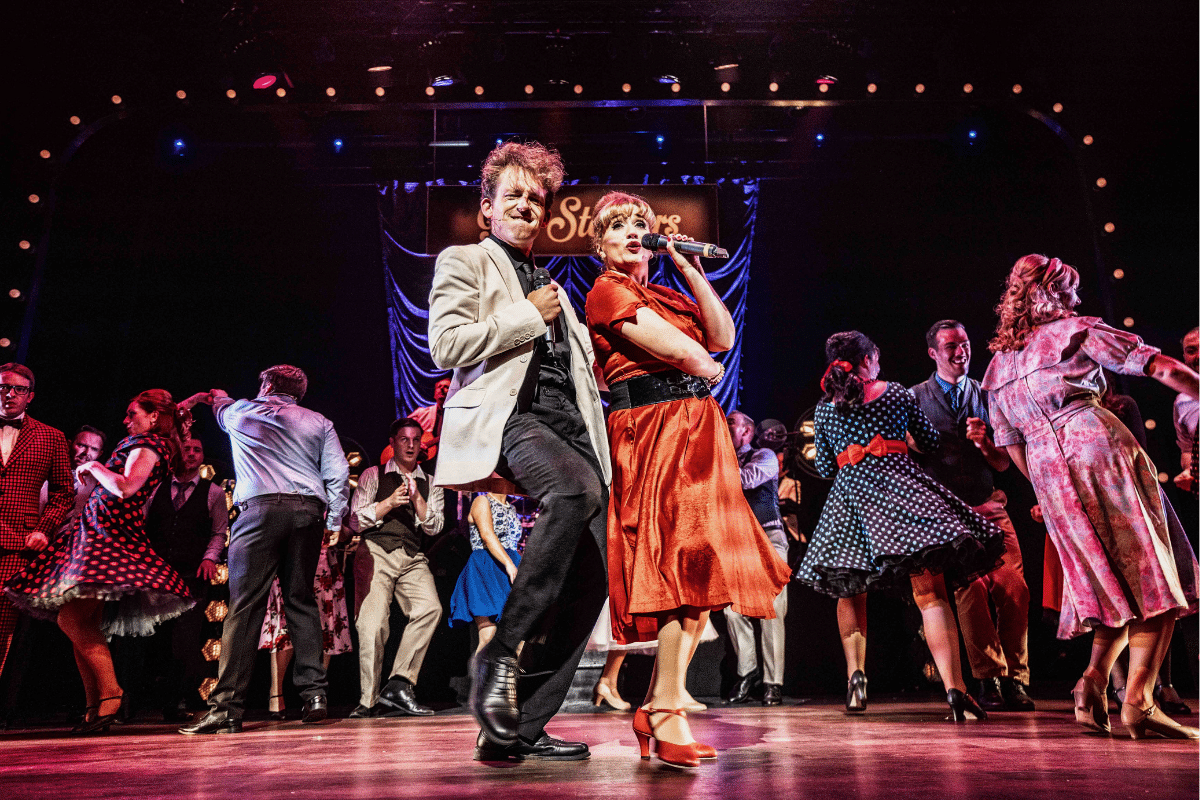
Carol: So, ‘Are You Dancin’?’, it’s set in 1960s Ireland during the vibrant showband era, it’s set in the county of Donegal, and it follows a shy young man by the name of Tommy O’Neill, who unwittingly finds himself at the helm of an up and coming showband, and as his star rises, we see his struggles both professionally and personally, and all set against the backdrop of 1960s Ireland. So it’s a really fun show at times, but it also involves some very serious elements representing, I suppose, some of the cultural and social issues in Ireland during that period, but what we’ve tried to capture throughout is the magic and the joy that the showbands brought to every town and county across Ireland.
Helen: It’s a very big show, so we have a very large cast. There’s almost 30 people on stage in the biggest scenes. We have an incredible seven-piece live showband with us, who will be lifting the roof of the Gaiety Theatre, without a doubt, with some of the most well-known pieces remembered by people throughout the showband era. It’s a great night out for everyone. It’s, as Carol said, it’s vibrant, it’s uplifting, but it’s also moving, and I think it will hopefully provoke conversation as well.
Carol: It’s a snapshot back into what Ireland was like in the 1960s, like loads of us grew up watching ‘Grease’ and films like that, you know, and it’s great. I suppose we felt Ireland during that period was underrepresented in terms of stage work, so we thought this was the perfect focus for our latest play, when we were trying to decide what to write about. So it’s an insight into Ireland’s version of ‘Grease’, I suppose. What was happening here during those vibrant times.
What was it about the showband era that enticed you to write about it?
Helen: I suppose what enticed us to write about it was its vibrancy and its colour, and the excitement that it brought to an otherwise more oppressive time in recent history, it was the first time that Ireland got out and danced and really got to express themselves, especially younger people. The show band era was considered the revolutionary language of the people. It was a time when they could, as I said, go out, dance, express themselves, and for that reason, we felt it was a good choice in terms of staging a play.
How did you research the time period?
Carol: We went through the history books, literally back through every decade over the past two centuries, and that was how we came upon the showband era. We grew up listening to stories from our grandparents of the wonderful dances that they would have attended back in the day, and also we spoke to some well-known Irish personalities, like the late great Jimmy McGee, at the very early stages of development.
So we were lucky in terms of getting an insight into the professional side of that time, in terms of the industry side, and then also we just got so many firsthand accounts. I mean, everyone, you know, the show bands were huge in every town and village across Ireland, so anyone we even mentioned it to, almost anyone had a story to tell, or else at least had a story that they had been told by their parents or their grandparents, so stories of the showbands and the dance halls have become part of local folklore in almost every town and village across Ireland. I mean, it was a very easy task. It’s recent history, we had so many first-hand accounts to pull from. In fact, we had so much information, it was almost hard to disseminate it. Yeah, narrow it down and decide.
Helen: It’s a well-documented period as well, and there’s been a lot of documentaries and books written about it, too, and we delved into all those aspects as well.
Given there is so much first-hand information, do you think that changed the route you decided to go with for the show? Did it evolve from those conversations?
Helen: We probably came up with the storyline quite loosely at first, but then the interviews absolutely prompted the dialogue and the storyline and how it developed. I do think the people that we spoke to had a strong influence on the shaping of the story.
Can you tell us about the process of bringing the show from the writing process to the stage?
Helen: It was quite a…it was a daunting one. A lot of people would start out, maybe writing a two-handed play. We probably didn’t write logistically at the beginning. We were taken away by the story and adding all of these extra characters, and then we had to face the challenge of how would we stage this.
Carol: So we were lucky, we had formed our production company, A Likely Story Productions, in 2016 and we started off with the classics like ‘The Importance of Being Earnest’ and ‘Blithe Spirit’, but then when we wrote our own play in 2018, we were in the fortunate enough position to be able to produce it ourselves.
I suppose that’s the struggle for an awful lot of writers, that they find it difficult to find somebody to actually put their show on the stage, and considering our show features 30 performers. Nobody was going to produce this unless we took the jump and did it ourselves, and we are so glad that we did. But for sure, it involved staging in our local theatre, the Moat Theatre in Naas. It was received so well there and sold out pretty much before it opened, so we could tell there was wonderful interest in the era from that. The feedback on the show was excellent. And then, over the course of the next six years, including a two-year break during Covid, we redeveloped and finely tuned the script, reworked some of the characters, and came up with what graced the 3Olympia stage back in 2024 and what is going to grace the Gaiety stage this week.
You’re writing, producing and acting in the show. What is a typical day in the theatre like for you?
Helen: Yes, a typical day in the theatre is extremely frazzled, but trying to compartmentalize, and I suppose broach each task with a separate mind, if that’s even possible, so it is a huge undertaking to produce and be involved on the stage side of things. I’m not sure if it comes recommended, but…
Carol: Even to give a glimpse, since we left Naas, we stopped off to collect the brochures and the flyers to give out tonight, and then once we got here, we ran in the door, signed in, had a meeting with the two managers here in the Gaiety, then we had a very quick meeting with our sound operator and teched some tech issues from a performance point of view tonight, and then we raced up here to meet and do this interview, so that has all happened in the space of about 60 minutes. So imagine that multiplied.
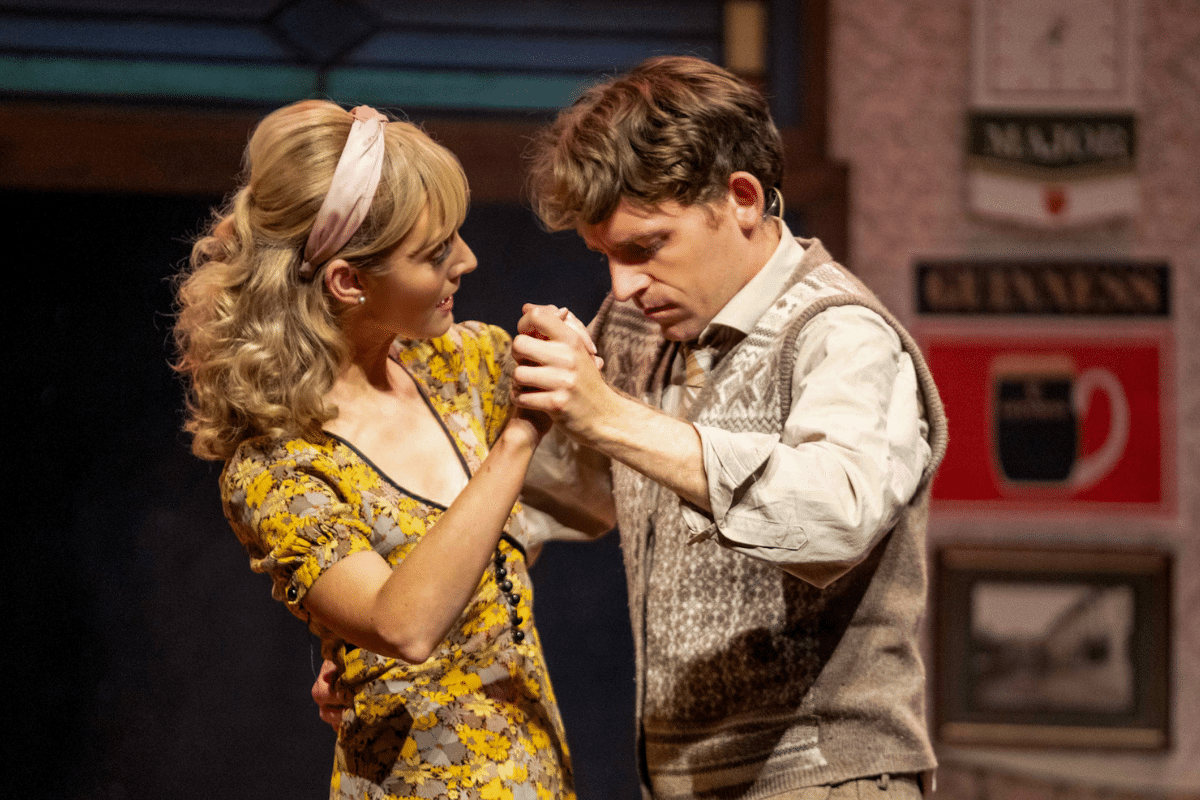
The production had a very successful run in 3Olympia Theatre in 2024. Have you made any adjustments for the Gaiety?
Helen: We were so thankful that it was so well received in 2024 in 3Olympia, and we possibly couldn’t have anticipated quite how well it would have been received, and how successful it was. There have been some slight changes, nothing major, just a few things, a few fine-tuning elements.
Carol: Yeah, because it had been largely reworked prior to the 3Olympia, and the feedback was so good.
Helen: If it ain’t broke, don’t fix it. What works works, and we move from there.
1960s Ireland is obviously very different to Ireland in 2026. What do you think today’s audiences should take from the show?
Carol: I think there’s a lot to be learned, I suppose, from the show. I mean, we do highlight an awful lot of cultural and social differences of the time. In one example, our play opens during a pub singsong, and in the 1960s, women weren’t really allowed in pubs in Ireland, and if they were, they certainly weren’t allowed to drink alcohol. So during our opening pub sequence, we have a sign saying women welcome for one night only, and when you think of that, obviously, compared to today, thankfully, we’ve come on in leaps and bounds; that’s only one small example. Ireland as a whole has shifted dramatically, and some of the deeper kind of character issues that we deal with in terms of self-discovery and kind of hidden truths, without giving too much away, identity struggles with identity, there’s a lot more acceptance nowadays with people.
Helen: Well, you’d hope that there’s been a change, but I think the stark reality is that it is recent history, and it’s quite eye-opening to see the changes that have occurred in a relatively short period of time.
Carol: And how far Ireland has come in some ways, and yet also how far we have yet to go in others.
Helen: And for that reason we like to brand the show as intergenerational, because while, while it’s nostalgic, certainly for the people who, who lived through it, and it’s also something that we would love a younger audience to come and experience, and, like we said, see those changes, and see the Ireland that was, and maybe compare it, and provoke a conversation about the Ireland that is now.
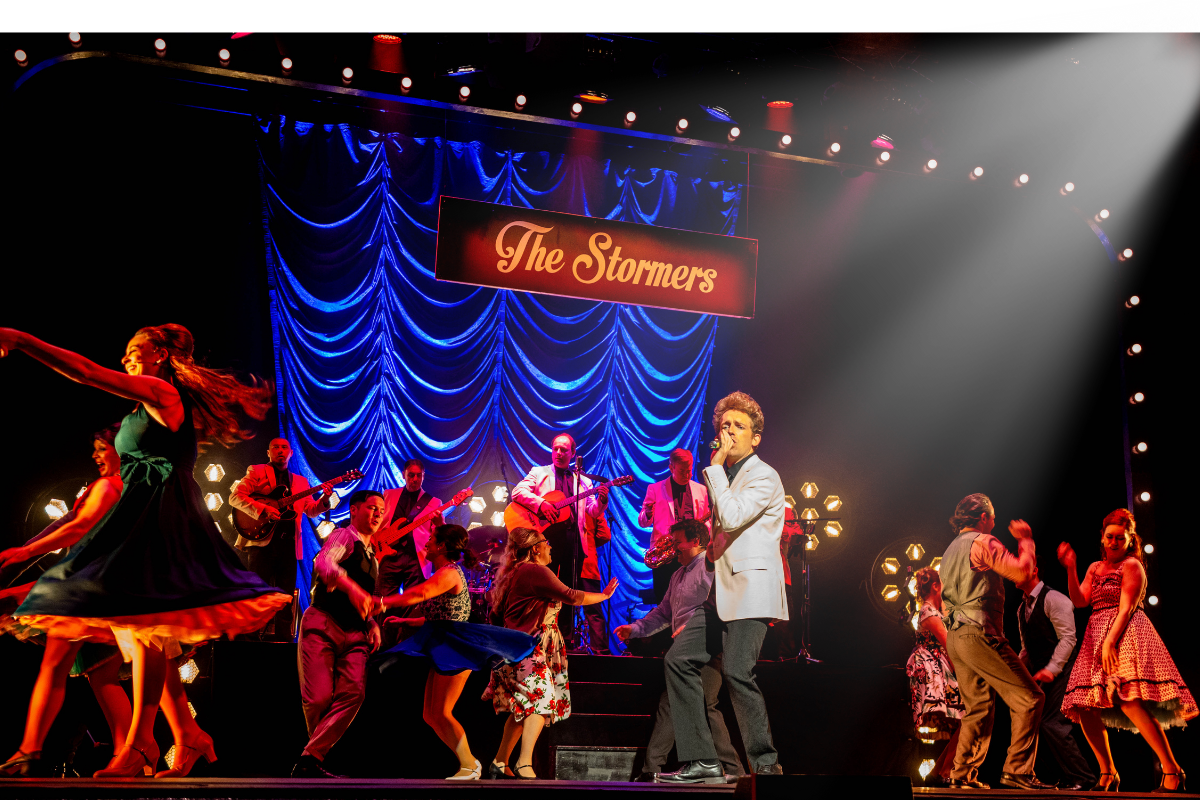
If you could go back in time, what showbands would you love to see live?
Carol: Oh, The Royals would have to be up there, wouldn’t they? The Miami, obviously,
Helen: Dickie Rock, and The Cadets. We have Eileen Reed, actually coming, lead singer of The Cadets. There’s just so many to mention. I don’t even know how you could mention. I’d loved to have seen Sean Dunphy, actually. He was a crooner of the time. We have one of his tunes, “If I Could Choose” as part of the setlist.
But that’s one thing that’s been commented on, especially by younger members of our cast and our dancers, when they come on board for the first time, and obviously, we’ve had a few new people each time the show has been revived. The overwhelming response of everyone is that they wish they had lived through this time and experienced it, so at least they get an opportunity to do that on stage, and it’s electric.
How would you describe ‘Are Ya Dancin’ in three words?
Carol: Vibrant.
Helen: Uplifting.
Carol: Moving.