Theatre


Interview
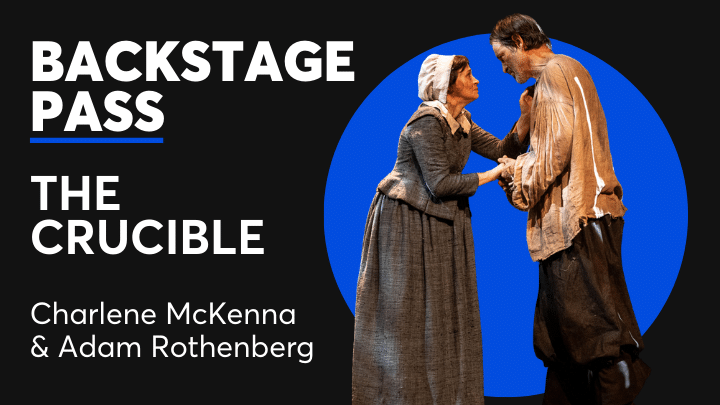
Backstage Pass: The Crucible – Charlene McKenna & Adam Rothenberg
Charlene McKenna and Adam Rothenberg join an all-star cast in bringing Arthur Miller's classic play 'The Crucible' to the Gaiety Theatre, Dublin until 21 March 2026.
The devil is alive in Salem. It’s 1692 and the puritan town of Salem, Massachusetts is gripped by mass hysteria. A lie from a young girl, heightened by an adulterous affair, leads the community to accusations of witchcraft and a spiral of condemnation.
With an all-star cast including Andrew McCarthy (Pretty in Pink, Weekend at Bernie’s, St. Elmo’s Fire), Niamh McCormack (House of Guinness, Small Town, Big Story), Charlene McKenna (Peaky Blinders, Clean Sweep, Raw), and Adam Rothenberg (Ozark, Ripper Street), Arthur Miller’s classic Tony Award-Winning parable The Crucible is a powerful and timely look at what can happen to a society when fear and paranoia take over.
We caught up with the on-and-off-stage husband-wife pair Charlene McKenna and Adam Rothenberg before curtain to discuss the history of the play, visiting Salem, the demands of the text, and “Acting, with a capital A”.
Can you introduce yourselves and the roles you’re playing?
Charlene McKenna: My name is Charlene McKenna, and I’m playing Elizabeth Proctor in The Crucible.
Adam Rothenberg: And I’m Adam Rothenberg, and I’m playing John Proctor.
Charlene: Well, on the surface level, I would say it is a play written by Arthur Miller in the 1950s, set in 1692, based on a true story, on a composite of characters, meaning, you know, what you’re seeing in The Crucible is not truth, but everyone mentioned is true, but their stories are kind of composited, and it’s about the Salem witch trials in Massachusetts.
Adam: Which he wrote in response to the McCarthy Era Red Scare. It’s a bit of a, is allegory the right word?
Charlene: For now?
Adam: Well, for then, but unfortunately…
Charlene: Still for now.
Adam: Still for now.
How would you describe Elizabeth Proctor?
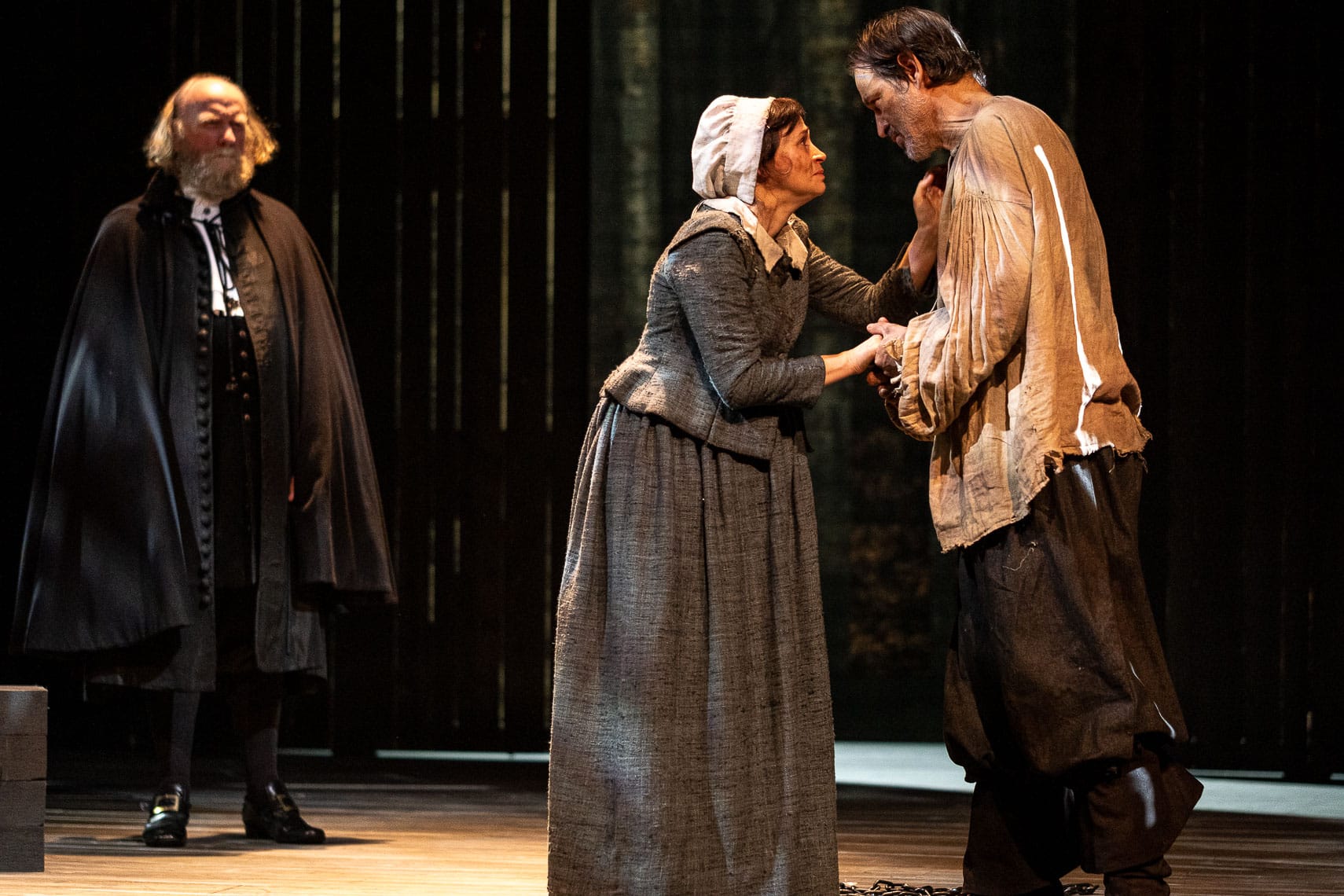
Charlene: Well, she’s described by other characters in the play as, you know, kind of cold, and she’s a very covenanted Christian, meaning she’s very upright. She would be a staunch Puritan in that regard. But I think underneath, she’s a very human, flawed, wounded, scared, mother, wife, survivor, frontier woman, who is trying to do her best in the climate that she’s operating in. So on the surface, she may come across as “cold and snivelling”, I believe she’s described as, but of course, she’s not. She, you know, she deeply loves her children. She deeply loves (her husband) John. It’s no spoiler that there’s been an affair in the story. So she’s been dealing with that. She’s been dealing with what we now know as postpartum depression, but she would not have known that, she was just ‘very sick’ after her last baby. And so she’s tough, but very vulnerable, I think.
How would you describe John Proctor?
Adam: John, I think… He’s a man filled with an incredible amount of doubt and self-questioning in a time and in a place where that was anathema, where there was no room for something like that. So, I think he’s a man who’s incredibly hard on himself for his failings. And, yeah, I think fundamentally, he’s a good person, but he’d be the last person to ever see that in himself, because of, you know, as she said, there has been an affair. The time that this takes place and in the Puritan worldview, anything, any phantom that would have crossed your head, any…
Charlene: Dark thought…
Adam: Any dark thought, anything that you know…
Charlene: Is human
Adam: Is human, or things you know, most of us could sort of, take on the chin and move on, back then it was always a sign of something. A sign that maybe you were damned, a sign that maybe you were not good. Actually that holds true for
Both: All of the characters.
Adam: But for John, I think John has a certain modern sensibility that when you take that and you put it into back then, is a recipe for self torture.
Charlene: I guess he’s more questioning than some of the others. Like I think Elizabeth, for example, follows the line, because that’s almost, almost easier to do than give in to your own sort of underworld in your mind. And I think John is just a bit more tortured by that. He’s very practical.
Adam: He falls short, but I think he’s unique, in that he falls short and he takes himself to task for falling short, whereas most people in the play, they fall short, but, you know, they’re people. They don’t really admit it.
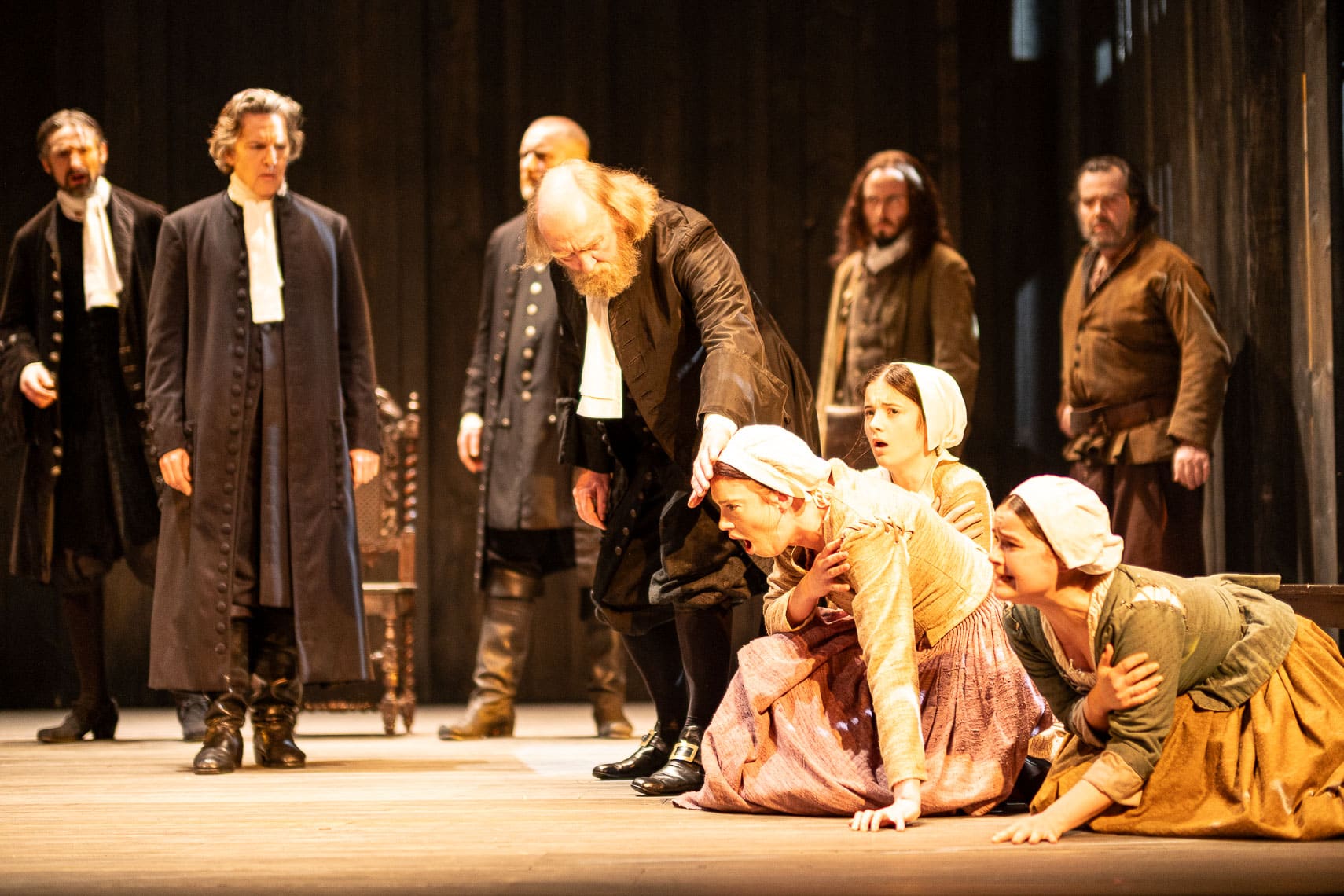
Given the pedigree of the play and the popularity of the 1996 film, is it intimidating taking on these roles?
Both: Yes, yes, terrifying.
Adam: The play is a crucible, you know? Yeah, a crucible being something of, I think I have this right, a box of intense heat and pressure that boils things down to their purest essence. And that is exactly what this play does to you as an actor. It quickly burns things off. And, I don’t know you should actually be asking me this at the end of the five weeks, because every night, I’m learning what I can’t afford anymore, you know, you just try to get to the core kernel of it so that you can keep going. I mean, I’ve never done anything like it.
Charlene: Well, there’s the sheer, you know, magnitude of the text, it’s an almost three-hour long play. Then there’s, you know, the musicality and the beauty of the writing and the language. But then that comes with its own, terror of not doing that writing justice. And then, within that type of speaking, finding the humanity and the truth. You know, you don’t want to just sound like “beguile me not”, and there’s no feeling behind it. You want to get that way of speaking, make it that it’s your way of speaking, you know. So there’s all of that, those challenges, which are all the gifts of being allowed to do it, and the terror of being allowed to do it. And because the play is so known and so iconic, and so many people have studied it, a lot of people know it and have opinions and expectations.
Adam: There’s nothing casual in it.
Charlene: *laughs* There’s nothing casual in it.
Adam: Or at least, at least, that’s the way my read on it has been. You know, is that a lot of the things in a play that maybe takes place now or even within the last 100 years, you could, I don’t know, find ways to cheat, find ways to, I don’t know, connect.
Charlene: It would also be easier to research. You know, this is 1692 like, you can’t just pick up anything. We were lucky enough to go to Salem on a research trip, which helped me immensely, I don’t know about you. In fact, many times before I go on stage, I kind of close my eyes and go back. We were able to stand in the ruins, all that’s left is rocks, you know, but the layout is still there of Reverend Paris’ house. You can get a sense of the size and literally stand and, like, touch the rocks from the actual place. That was so helpful to just, you know, close your eyes and go right back there, but that’s hard as well, you know, because you want to play these characters as people. But we all have this notion of the 17th century, you know, it’s so far removed, and you want to make it so ‘now’, so that that’s a challenge too.
As real-life husband and wife, how is it playing their relationship on stage?
Charlene: Well, we thought it was going to be a disaster. We were like, is this a huge mistake? How will we get through this? Because living together, working together, acting together, with two different styles, as in approaches. But it’s actually gone really well. I mean, really well. And for me, because there’s, you know, so much sadness and heartache and loss in the play, I thought it might make it harder, because sometimes, weirdly, when you have that intimacy, you can then put a wall in front of it, because it’s family, but it wasn’t that at all. It’s, for me, been a shortcut. It’s in the love; there’s no acting required there. I get that for free. So that’s been really helpful I think.
Adam: I don’t think this is a play for a couple to do together in the beginning of their relationship.
Charlene: Yes, maybe seasoned is better.
Adam: The director said an interesting thing. He said, there’s really almost no time in the play where you see them getting on, and yet you feel the love, and the history there. That’s been some of the nicest feedback I’ve got, you know. It seems obvious, like, ‘Oh, you guys are married, we really see the love on stage’, but that could easily not have been there.
Charlene: It’s nothing written. Like the scene opens with the two of them. The whole beginning is showing their sense of separation, as per the script, their sense of separation and that awkwardness then transcends into fighting, and fighting to her being carted off to then court, and then, well, you know how it ends. So it’s not like they’ll get a lovely scene and you get to see, but the love is there.
Adam: Yet, in the play, what they’re fighting for is each other. They’re fighting for their marriage, and then, of course, she ends up fighting for her life, and he’s fighting, you know, so, yeah, I’ll tell you what the biggest hiccup has been, it’s been having a two year old because you get home, like, there’s been no craic had at all.
Charlene: Not one pub has been sat in.
Adam: We’re both exhausted, we go to bed, because we have a little creature that likes to get up at 6am.
Charlene: “Wake up!” *laughs*
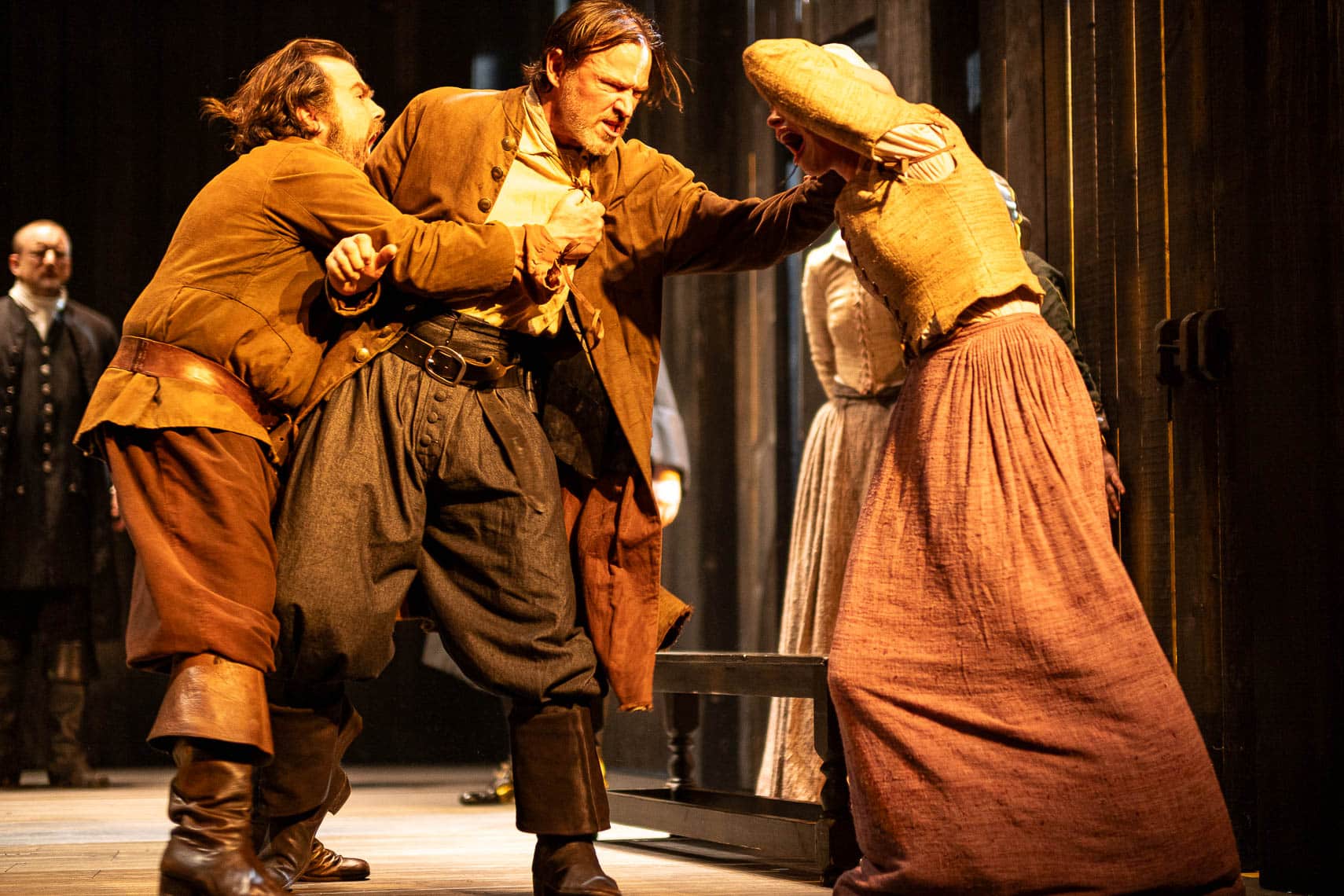
You’re both well known for your television work including on Raw and Ripper Street, how different is it performing on stage versus screen?
Charlene: We were just talking about this the other day, put it this way theatre makes you feel like you’re bleeding for it! On screen you don’t have to do a performance like, 900 times like in, like in this, you know. If you’re blessed with a big budget, you might get a day. But then, of course, you’ve got the 14, 16, hour days, you know, there is that side of filming, and the 5am starts and all that stuff.
Adam: But you only have to get it once on film,
Charlene: And they got it!
Adam: Sometimes it’s actually bums me out, if I feel like something went right on stage, there’s this phantom hanging over you, like, am I gonna do that again?
Charlene: Is that gonna happen again, which often happens, you nail something one night, then you, you know, you get something next night. You’re like, oh, well, that bit went better yesterday… So I don’t know, like, I love both of them. I love screen and stage. (On stage) You’re not hiding. You’re not hiding. No one’s editing you. You’re either good or you’re not good, yeah? And I like that, and I like the thrill of that. It’s like men from the boys. You’re naked out there.
The Crucible was written in 1953 at the height of McCarthyism hysteria, drawing parallels with the Salem witch trials. In 2026 do you think it still has relevance?
Charlene: I mean, I absolutely do, you know. It just, it breaks my heart that it is current now. And I mean, I think that’s why it’s on. I know Caroline Downey wanted to put something on that would get people talking, like, important talking when they leave. And that’s what we want. We want discussions. My friend came the other night and she said I cried twice watching and she told me she couldn’t stop thinking about the current climate and how heartbreaking it is that a story from 1692 is still relevant in 2026. It’s just, it’s so sad, but there’s no denying that there’s absolute mass hysteria, fear mongering, turning people on each other that were friends and neighbours.
Adam: The erosion of what’s true…
Charlene: The erosion of truth. You know, people don’t know what’s true and what isn’t. And they didn’t have AI and social media, you know, but yet, there’s that part of our humanity that can be manipulated like that if you get the wrong puppeteers. So it’s, it’s, it’s sad. It sadly is very applicable to today, which is a shame. I’d love for people who are just coming to watch to think: ‘Isn’t that terrible? What happened all those hundreds of years ago? And it’s no relevance today. We fixed it!’, but we haven’t.
How would describe The Crucible in three words?
Charlene: It’s intense, it’s emotional.
Adam: How about “Charlene McKenna brilliant”, there you go.
Charlene: Intense, emotional, visceral. That’s what comes to my mind. Yeah, that’s my Malcolm Gladwell, ‘just say it’, right? What have you got?
Adam: Purifying. Hard. I’m trying not to say depressing…
Charlene: Poignant?
Adam: It’s epic. It’s an epic. I mean, it’s theatre with a capital T.
Charlene: It really is, I would say it’s theatre with all caps,
Adam: It asks for acting, like, capital A, you know, like, you come up here and you’re going, “God is dead”.
Charlene: “I see the boot of Lucifer”,
Adam: And you’re trying in your head to go in, like, “who am I?” I don’t know where I fit in this. So purifying, hard and epic.
Experience The Crucible at the Gaiety Theatre until 21 March 2026. Tickets are available here.