Music


Fresh List
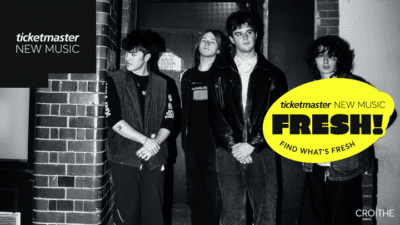
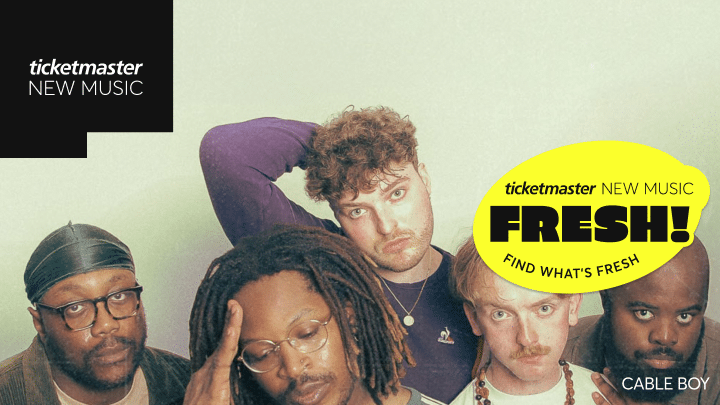
Ticketmaster Fresh List 2026: Cable Boy
We chatted with Cable Boy about evolving their sound, taking ownership of their practice and their debut album 'Forever'.
Can you introduce yourselves?
Semi: Hi, I’m Semi,
Corn: I’m Corn,
Semi: and we are from Cable Boy, and we are the Ticketmaster Fresh List artist for April.
How did the band start?
Semi: So it started with our bass player and myself, we were rehearsing and just writing songs, and then fast forward a couple years and our lead guitarist Jason joined the band, our drummer, Fionn joined the band, and the amazing Corn here joined the band, and now we are Cable Boy.
How would you describe your music?
Semi: Driving, a little gothy, little disco-y,
Corn: Kinetic.
Semi: Yeah, kinetic and forceful. Lot of attitude.
Corn: Sassy.
Semi: Sassy, yeah, some people say that.
Who are your influences?
Semi: For this album [‘Forever’], we definitely listened to a lot of Bloc Party, listened to a lot of DIIV, a lot of Yves Tumor.
Corn: Sonic Youth.
Semi: Yeah, The Cure as well.

How did you get your name?
Semi: Our old drummer came up with it because he watched an episode of Seinfeld. I’ve actually never seen Seinfeld, but someone said the name cable boy or something.…
Corn: Oh, so the cable guy got shot. And, yeah, I don’t know if it was Kramer or some other character. He was like, “Cable boy! My dear cable boy!”, or whatever. And they thought that was hilarious.
Semi: And thus, you know, now we’re Cable Boy.
Corn: Yeah, forever.
What would be your dream venue to play?
Semi: I’d love to play the 3Olympia Theatre. It’s very pretty, I’ve been there twice, like, before a lot of people came in, when it was just empty and filling up. And when it’s empty, it has, for lack of a better word, a lot of aura, you know? It feels very iconic. And the way it’s designed, I know there’s venues that look like it, but there’s something about it. The way you have half of the standing spaces underneath the thing as well. So even when you take a picture, it looks really, really picturesque and cinematic, you know, very fantastical too. It’s a very pretty venue. I like it a lot.
Do you have any backstage rituals?
Corn: Oh, um, we do the run of the mill vocal warm ups. Yeah, tea too.
Semi: Try not to get nervous, try to calm myself down.
Corn: Actually, a ton of jokes.
Semi: Yeah, we joke a lot.
Corn: It’s disturbing, how much we all joke.
Semi: Our rehearsals are like, 50% bits, and then 50% actually rehearsing. So before we play live, we try to lean into the jokes, because, we’ve already done the music, but the jokes are kind of a reminder, don’t take it too seriously, you know, it’s still fun. You know, doing the show is meant to be fun. So like, we try to keep that atmosphere before we play a gig.
Semi: Yeah, it helps with the chemistry on stage as well being able to look at it as like, oh, you know, we’re just a bunch of friends, being able to play music in front of people.
What’s been your most memorable live experience?
Corn: I got one. So we played Other Voices down in Dingle. And the first night we played we were the last band to play in The Dingle Pub, and it was the only place open, so there were a ton of people trying to get in for a last drink.
Semi: It was jammed.
Corn: Yeah, it was pretty packed. But there was something about that set where we, I think it was just kind of like the energy we fed off, a lot of the energy.
Semi: I’m not gonna lie, for me, it was because there was, like, people we didn’t know in front of the stage, like, going crazy. This is like a pub, you know?
Corn: People were crowd surfing!
Semi: Crowd surfing in a pub! Like, yeah, people got on top of the bar and then jumped into the crowd. Smacking the roof and all. But it was a really wild show. It was a really, really wild show. It was amazing, though, literally amazing. It was a very validating experience too, because I we were just testing out the songs that were going to be on this album, and it was a switch in sound for us from what we used to do. So it was like, oh, people really like it. It’s like you can see it visibly. Them reacting to certain songs and coming up to us after and being like, “Oh, that song you played at the end of your set was really cool.” And I was like, “Oh, that’s not even out yet!”
Corn: I mean, also at that point, like, we hadn’t really played those songs, so we had them for a while, thinking, does it even make sense? And getting that reception…
Semi: My God, it made sense.

Who would be on your dream festival line up?
Semi: I feel like Tame Impala would be a good festival band. I feel like they would just, embody everything I want to see from a band and a festival, you know? I feel like I saw Solange at Longitude ages ago. I’m dating myself, but like, I thought she was really good. And Sampha, I think Sampha’s really fun. That was an amazing show as well.
Corn: Band wise, I’d love to see Yves Tumor. I actually haven’t gotten to see the band.
Semi: Yves Tumor were really good.
Corn: Yeah, and in terms of, like, a solo artist?
Semi: Dijon?
Corn: Yeah. Dijon. Dijon would be a great festival artist.
How do you approach songwriting?
Semi: This album initially was going to be an EP, so I really focused on, like, specific themes. I don’t think dark themes is the word, but I definitely wanted the music to sound more gothic and bass driven. But also, you know, to have very impactful guitars and be energetic and punchy. So I think a lot of that was just sitting in front of my laptop and starting with bass, and then I would send the demos to the guys, and when we got to the studio, it was like getting my demos that were very, like, bare bones, and then, asking the guys to liven it up and add parts to it and everything.
Corn: In terms of the writing aspect as well, Semi, was consuming a lot of other media. So, you know, reading books, watching TV, watching movies, which kind of lent to a lot of the content. Also we jam a lot as well during rehearsals. Sometimes during break, we’ll just literally play instruments. And, you know, it’s kind of like, oh, that sounds great. We could pin that idea in the future. And I think a lot of that happened in the studio, where Semi would bring the demos, and we’d play them, and we’d talk about it, and we’d have the time to kind of like, flesh it out and maybe give it this new sheen, or new elevation, you know, in terms of the compositions and everything.
Semi: A lot of experimentation and a lot of willing collaboration. Everyone brings their ideas and it kind of, like, develops in such a way that I’m like, “oh, I can’t hear the song without this idea”. Or, like, listening to my demos, and starting to be like, “oh, ew. I want to listen to the work that we did together in the room”. That collaboration and experimentation is a big part of our writing process anyway.
Who would be your dream collaboration?
Semi: That’s hard. Right now, I would say Yves Tumor. Yves Tumor or like Blood Orange or someone like that. I feel like, when I listen to their music, I really connect with it. I don’t know. I feel like we would work well together, and I feel like we’d be able to bounce off each other in a way that would create something very nice. We also probably have similar influences as well, so that could be cool to work with them.
Corn: There’s a UK artist called Wu-Lu who makes, kind of like, definitely punk, but, also just alternative indie music in general. I feel like he’d be really interesting to work with, because our sound is not just evolved from, this kind of indie bedroom pop, to now what we coined, ‘goth disco’, but we’re also trying to fuse other genres together too. Electronic music, disco and, you know, other sounds. So it’d be really interesting to work with someone that kind of approaches music in that same way as well.

What’s the best advice you’ve ever been given?
Semi: I ran into someone I used to be in a band with, he’s a little bit older than me. I was kind of like, oh, you know, music isn’t going well, and he was like, you know, you’re never going to really know how everything is going to go unless you actually just do it. Unless you really just do it with intention and take the time and take yourself seriously as an artist. Even if thirty people are listening, or five people are listening. If you want to grow your music like, you have to be seen to take this thing very seriously and if you’re creating a world you want to invite people into it, you know, you want people to want to come into this part and participate in the environment and also see the music through your eyes almost, you know. But I think that advice of just taking yourself seriously as an artist and really just doing it. Like, don’t half ass it, you know. If you’re going to put out a song, tell everybody about it. Post about it a lot, if you can get some visuals, get some visuals. But make sure everything is done with intention.
Corn: Also, like, not only taking it seriously, but also taking care of yourself. I think that’s, super important. I mean, Semi can attest it is. A lot of us work day jobs as well. And it’s a bit of a challenge, balancing that and music as well. So being able to give yourself, that grace to be like, okay, you know, this is a path. There’s nothing wrong with being able to take care of yourself. And you can still call yourself a musician, having a job, that doesn’t necessarily infringe upon your passion or your creative output or whatever. So you know you’re just as important as anyone who works in music.
Semi: One hundred percent.
Corn: Yeah, you can get really easily disillusioned. And I feel like if, if I wasn’t brought up the way I was, kind of understanding that, you know, we have to take care of ourselves in the real world, it would really make the journey in music a lot more frustrating and a lot more discouraging, because I’d have this, like, big, huge perception of something that’s not really true.
Semi: You have to get to the point where someone asks you “what do you do?”, if you feel passionate about the art that you make, you should be able to say that. Even if you work a nine to five that probably takes a bunch of your time, you should still be able to define yourself around the artistic practice that you do. You know, if you’re filmmaker, if you’re journalist, if you’re anything, anything that takes a lot of work to get into, that you have to put a lot of free hours into, that you have to sometimes even put in your own money to get into, I think at that stage, you need to start identifying yourself with your artistic practice, because you are putting emotional work and emotional time in and that takes up a lot of real estate in your mind and your heart. So like, if you’re not going to call yourself the thing that you think about all the time, then nothing’s done. There’s no point doing it. But it takes a while as well to get to that type of thing. So I think, like to what Corn said, take care of yourself, so that you know that you are in a mental place and an emotional place to call yourself and define yourself by your work and who you are intrinsically.
What would be the key track of yours that you recommend people listen to?
Semi: A great question. I think, for me, there’s two songs. There’s a song on our album called ‘Slayer’, which I think has the dark aspect and the very bright aspect of Cable Boy. So like the gothy, kind of, shoegazey side, and then also the, what a lot of people call the more pop side of us as well. And then the single that we just dropped called ‘Forever’, which is also the title track of the album. When we say goth disco, I feel like that songs has that. It’s the song of the album. To me, anyway.
Corn: Yeah, I think ‘Toxic’. We have a song called ‘Toxic’, which really lends to a lot of the kind of pop elements that we also like to fuse with the, you know, rock sensibilities. I would also say ‘Silo’, which is another track on the album, though it is relatively softer in comparison to the rest of them, I still think it touches on a lot of the elements that we try to bring together. That sense of, you know, making things danceable and kind of providing a bit of drama within a lot of our music as well.

What is your career highlight to date?
Semi: For me, it’s between Other Voices and a Vicar Street show we played for Catherine Connolly. That was pretty cool. It was just cool to be on a stage that massive, and like, just see a full, huge stage, and loads of people in front. I thought I’d be intimidated, but I actually just got like excited. It was very electric. You know, when people say something is electric, the atmosphere? That was the first time I really experienced that. So in terms of scale, that. But in terms of, like, “oh, wow, I’m this could be my career”, I think Other Voices for sure. Those are two big ones.
Where can fans see you next?
Corn: First of all, 25 April, Oh Yeah Centre in Belfast. We’re a part of a showcase for Happy Days fest. They can find us on 8 May in Wavelength, Cork as a part of our tour, and also in Dublin, 15 May at The Grand Social, which is the last stop in the Irish leg of our tour.
Semi: And we’re also playing All Together Now later in the year as well. So that’s gonna be really fun.
What does the next year look like for Cable Boy?
Semi: Um, what’s next? Our album’s dropping on 17 April. So that’s very surreal. But yeah, that’s the next thing, and after that? We’re going to be touring, trying to play as many shows as possible. Yeah, I think it’s just about trying to give the record as much life as possible in the next year or so. It’s kind of weird, because I don’t really know what’s gonna be after the release, but it feels like there’s a whole other world that I can see happening as soon as it’s out. So right now, I feel like we’re in pre album mode, and I’m just like, okay, we have these dates, but once the it drops, I know it’s gonna be show after show after show after show. So that’s what I hope. That we can give the music to as many people as possible live, as well.
Corn: I think we’ve been writing, like, this album has been, what, two years, or over two years, almost?
Semi: Yeah, 2024. We started the process of like, doing an album in 2024 so it’s nearly that now.
Corn: But even in that time, we’ve also kind of grown as a band and, like, understand ourselves better, so that’s also allowed us to write stuff together, which has been kind of happening sporadically and spontaneously, which has been great. So there will definitely be more music as well.
Semi: Yeah. I want us to be like a staple in the Irish scene, you know? Like, I don’t know what that would look like, but I just want to be like, you know, the same way you’d think, oh, these are the bands in Ireland, you know, these are upcoming bands in Ireland. I want to be that, you know? I want to really develop the grassroots, but also, just, you know, the Irish scene in general. I want us to really further entrench ourselves within that, and to grow with all the other bands that we’re friends with. And I really hope that this album kind of puts us in that position to just be in the mix. I feel like once we kind of get into that stage of, like, playing everywhere, and then we also have this body of work out, which we’re very, very, very proud of, that’s what I hope. I hope that we can just carve out our own space in the scene. And, you know, I hope we can just be ubiquitous. You know? Everywhere. Cable Boy everywhere.
Cable Boy play Oh Yeah Centre, Belfast on 25 April for Happy Days Fest, Wavelength, Cork on 8 May, and The Grand Social, Dublin on 14 May 2026. You can buy tickets here.
Artists can submit themselves for consideration for the Fresh List here.