Theatre


Interview
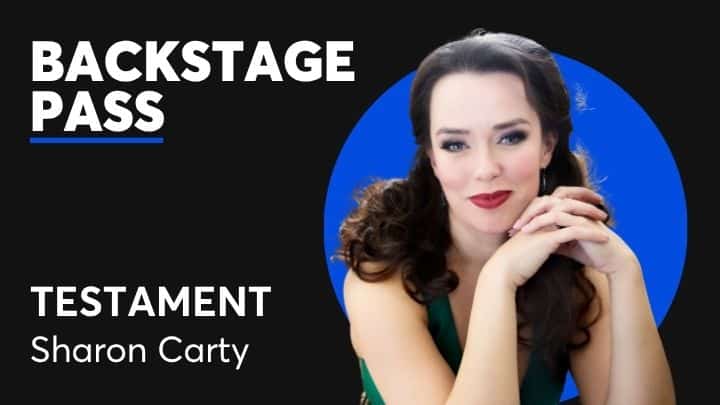
Backstage Pass: Testament – Sharon Carty
Irish National Opera's Testament runs at Gaiety Theatre, Dublin from Thursday 8 October until Saturday 10 October.
We got the chance to catch up with Sharon Carty, who stars in the lead role of Mary in Testament, to chat about getting into singing, the underrated work of makeup artists and being able to create an opera role for herself.
Could you introduce yourself?
Hi, my name is Sharon Carty, and I am playing the role of Mary in Testament.
What can you tell us about Testament?
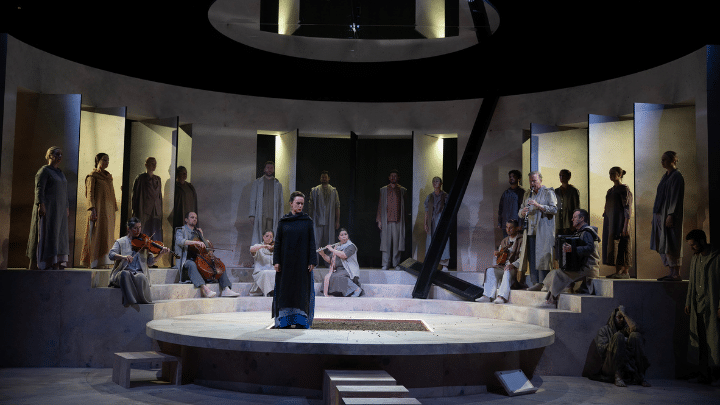
What can I tell you about Testament? It’s named after the book The Testament of Mary by Colm Toibín, and the wonderful composer Tarika Regan has set it to the most incredible music. It’s a mix of choral and instrumental and solo stuff. It’s unusual in that this opera has seven instrumentalists. That in itself isn’t unusual, but the seven instrumentalists are on stage with us. So they form part of the action and act with us on stage. So that’s a bit of a departure from your normal opera experience.
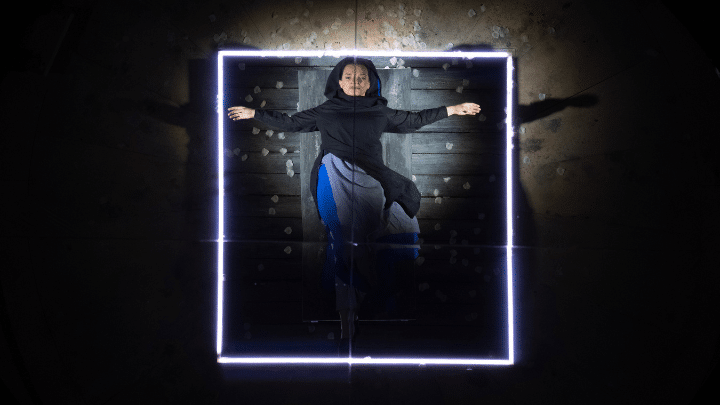
Mary is such a familiar figure in art and religious tradition. How did you go about finding a version of her that felt new and relatable to today’s audience?
I suppose in my research, I mean, like any time you go at a character, regardless of how known or whether it’s a completely new person that a director or a composer or a librettist has dreamed up, you still start at the same point. You go back to the text, and then you look at what the two artists, the composer and the librettist, what they have done with it, and then you go from there. I mean, any other research is kind of secondary to that. I think you have to go with what’s on the page in front of you.
I read Colm’s book, The Testament of Mary, listened to Tarek’s music, discussed things with other colleagues, and a lot happens actually when you’re in the rehearsal room. That’s another thing about opera. When another team might do a production of this, the person who sings Mary the next time might have a very different kind of take on it. So a lot of that is an alchemy that comes from the team that you have in the room in a given production. So we have a fantastic team, so we’re very lucky in that sense.
What’s it like creating a role from scratch with a living composer rather than stepping into a role that is decades old with a history behind it?
Oh, it’s a double-edged sword coming into something that’s never been sung before. On the one hand, obviously there’s a lot of pressure because it’s kind of like someone’s baby. The composer has poured, most of the time, several years into creating, drafting, you know, revising a score, and that’s a huge responsibility for a singer. But then, you know, with great power comes great responsibility, but with that responsibility comes a lot of excitement and a lot of room to put your own stamp on something, and it is really exciting to see you know, ‘role created by Sharon’ when you have the score going forward.
How did you become an opera singer?
How did I become an opera singer? It’s a kind of a strange meandering story. It wasn’t on purpose. When I was a child, I always wanted to be a P.E. teacher because I was mad into football and hockey and cross-country and stuff. But thanks to one particular amazing music teacher that I had in secondary school, who had been an opera singer, she introduced me to a lot of opera and art song and sent me home with records at the time, you know, like LPs of Janet Baker and Mozart. So we sang all the time in school, in primary and secondary, and at the time I didn’t realize how important that was, or how important that would be in my life. So I went and I did a P.E. degree in the University of Limerick, and it was fantastic. And I taught for a couple of years, but ultimately there was always a kind of a niggly little voice, you know, kind of at me the whole time. So I ended up after a couple of years teaching, going to Vienna to study singing full time, and yeah, that’s kind of like a, the rest, as I say, is history kind of type of situation. You know, one thing led to another, and I ended up in Frankfurt then, in the Young Artists Program, and ended up staying there before coming back home a couple of years ago. So it’s not the usual path into it.
What differences would you say there are in preparing for an opera versus preparing for another theatre run?
I guess there’s a couple of different ways that you could compare preparing for a theatre run or an opera run. I mean, both involve looking after your body and making sure that you have enough sleep and that you’ve, you know, enough water on board because, you know, using your voice can be very dehydrating and your vocal cords need enough water, so just making sure that you’re drinking enough water is a big thing for us. I mean the two disciplines in that sense are quite similar. You know, you kind of have to prepare your focus for the run and (think about) sleep and food and all that kind of stuff.
I have the feeling that maybe singers’ voices are a little bit more delicate in terms of the demands that are placed on them. Maybe actors will be coming for me if I say that! But just the demands of singing mean that there are very specific kind of preparation things that you need to do in terms of like warming up and cooling down and having your stuff prepared well. Really that is the biggest thing so that when you step on stage, that you don’t have to think much and that you can just let that autopilot take over and then be in the moment and flow state.
Do you have any backstage rituals?
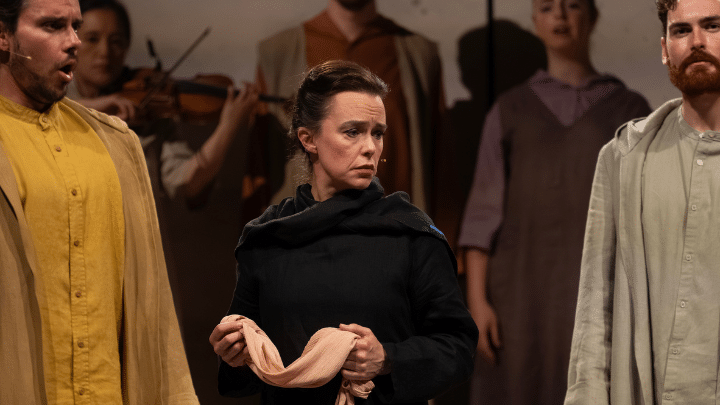
Do I have any backstage rituals? No, I try not to. Not any kind of, you know, funny ones about like wearing such a pair of socks or you know, having a piece of jewelry. I try not to have to depend on that because I’d kind of get worried that if for some reason I lost the item or wasn’t able to carry it out, that that would somehow affect me negatively. But, there’s the usual things. I like to get into the theatre a good bit before makeup time, so that I have the feeling that I’m there and can warm up, and that I’m not rushing and stressed beforehand. Yeah, and then otherwise it’s just the usual – you warm up physically, warm up vocally.
I suppose that being in a makeup chair is actually the biggest kind of ritual thing. I talk with lovely makeup artists in theatres all of the time about how kind of meditative it is to go in, and it’s this kind of transition period between you know, coming off the street as Sharon and then being turned into someone completely different for a couple of hours, and that’s the job of a makeup artist. That’s a kind of a really important transition between the two. So, maybe it’s not a ritual, but it’s one that I appreciate and it’s important. I think it’s probably underestimated how important it is. Like, obviously, you know, you put on a costume and you get into makeup, and then you physically look different, and then that helps with a performance of a character. But the actual process of that happening, there’s just something meditative and transformative that happens in that, you know, half an hour, an hour, depending on how how complicated the makeup is. That’s really helpful. And makeup artists, they’re always so skilled at knowing whether an artist wants to kind of be chatty and yap and kind of like get that kind of nervous energy out, or kind of get riled up for it, or whether there’s someone that needs kind of a bit of quiet, and that can vary from day to day as well. So, yeah, makeup artists end up being kind of like psychologists or therapists in that kind of way as well. So they’re an important part of the process.
If someone has never seen an opera before, what would you tell them about Testament to convince them to give it a go?
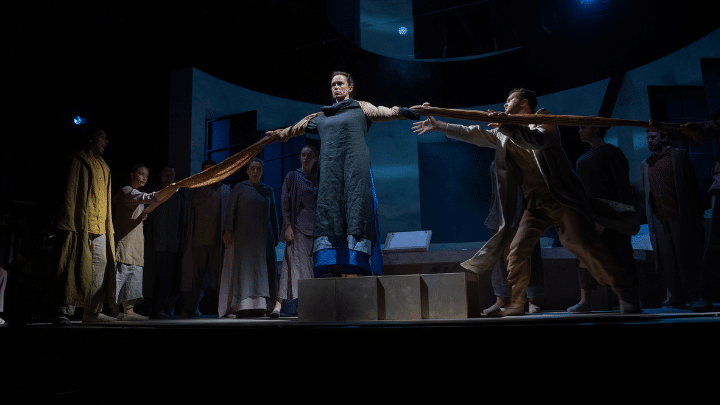
Oh, if someone’s never seen an opera? It’s such a tricky term like opera because there’s kind of a typical picture that comes into people’s heads when you say opera, and that’s maybe kind of Wagner or you know Carmen or Puccini, Madame A Butterfly, and it’s all massive sets and massive orchestras. But I mean, opera goes from right back to the 1600s up to today, and there’s all these different constellations of instrumentation and vocal styles and languages and musical styles, and Testament belongs very definitely to a very modern, contemporary opera tradition. There’s a really heavy focus on chorus, which is amazing. It’s in English with subtitles, so there’s no barrier in terms of accessibility of it being [in a different language]. So it’s very immediate in that sense.
The text is by an Irish person, which means that there’s a really strong sense of Mary being a little bit like an Irish mammy in a really lovely sense that there’s kind of an Irish sensibility to how he describes her inner thoughts, so I think that’s relatable. That will be relatable for a lot of Irish people, and we all know the stories that are portrayed in it. So there’s not an awful lot of work to do to come and sit down and enjoy it. I think if anyone’s ever been curious about coming to see an opera, this would definitely be a good gateway drug.
Can you describe Testament in three words?
Oh God, Testament in three words. It’s beautiful. It’s tragic, also, and I think the story is necessary to be told from the perspective that it’s told.
Looking for more theatre shows? Check out our Theatre & Arts Guide to find more opera, dazzling musicals, thrilling drama and more.