Music


Interview
Steven Price talks Ocean In Concert: “We wanted people to feel inspired to act”
The award-winning composer discusses movement as inspiration, calling for change, and working with Sir David Attenborough
If you don’t know who Steven Price is yet, you’ve likely already come across a movie or documentary he’s composed the score for. From cult classics such as Scott Pilgrim vs. The World (2010) and Attack The Block (2011), to the Harry Styles-led My Policeman, to David Attenborough projects such as Netflix series Our Planet (2019) and film Life on Our Planet (2020) – and, of course, Ocean with David Attenborough (2025). The latter of which is now a live experience with a full orchestra: Ocean in Concert.

Ocean is a moving call to arms for audiences to understand both the majesty and the plight of the ocean, and what can be done to ensure our oceans and wildlife continue to thrive. With Steven’s expert score and Sir David’s pedigree in Natural History projects, it’s no wonder that the film has snagged a spot on the 2026 BAFTA Awards Long List for Best Documentary and Outstanding Debut by a British Writer, Director or Producer. And from 24 February – 12 March, fans and climate activists alike can experience the film in a whole new way: with a live orchestra playing the score direct to screen at the Bristol Beacon, Royal Festival Hall London, Symphony Hall Birmingham, Usher Hall Edinburgh, and 3Arena Dublin.
To learn more about the creative the score the film and for a live orchestra, we sat down with the award-winning Steven Price, who took us through working with Sir David, matching music to the ocean’s movement, and feeling inspired to act in the best interests of the ocean.
What goes into the process of creating the score for a project like Ocean in Concert? What do you begin with, and what do you want to convey?
It started with a meeting with the filmmakers, really. They came to my studio and told me what they were looking to do, which was a bit of a different [direction] from what I’m used to. I’d done Natural History things before, but never one that was quite focused on a particular thing, with the aim to educate people about what was happening in the ocean. But we were trying to make a film that was as emotional and impactful as you possibly could. We wanted it really take people on that that journey, and to really let music and the voice of Sir David Attenborough carry the whole message.
So it was a matter of working out how to do that and what would be the best devices we could use. And we decided very early on to strip out a lot of the sound design thing you’d normally hear in a national a natural history show, and really have the music be quite a detailed and ever-evolving thing. The voice of the ocean became a very vocal thing. So it was a very vocal-led score with the the aim to move people.
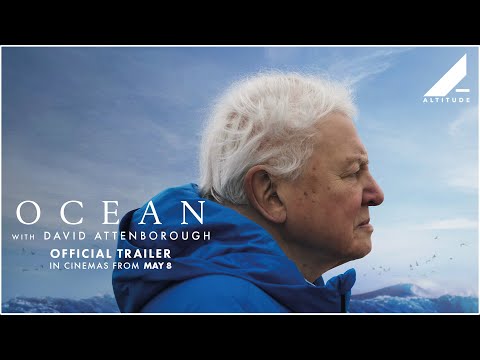
Do you feel like there was pressure with Sir David Attenborough on Ocean In Concert? I know that you’ve worked with him before on Our Planet, but did this feel like a bigger project?
It felt important. And I think with all the weight of his history and everything, the fact he’s standing in front of the camera sort of just really saying at this stage of his life what damage has been done and what needs to change, it feels like an important message. So you definitely didn’t want to let the side down. You wanted to bring your best work to it. And I’m very lucky that it all gets performed by these amazing people.
Now that you’re working with an orchestra who will be playing the score live, did you have to change anything from the screen to the stage? Are you working very closely with them to bring your vision to life?
Yeah, and I work with the same, the same people that worked on the film. My orchestrator has been with me for my whole career, going back to thing like Attack The Block. So we’ve done a little bit of live stuff before, where we’ve taken film scores and changed them [for the stage]. For Ocean, it translated very well into the live space because it was originally quite a small orchestra. And the voices too; what was originally one voice in a lot of the score – which is Lisa Hannigan‘s voice – is now about five or six people on the stage. The idea is to let people feel the music being made in real time.
And it’s a bit of a thrill for me because I usually get to hear these things once in the studio – we play them and it’s in a controlled environment. And it’s lovely and it’s amazing, but that’s it. Then it’s this recording, and you never get to feel that again. So it’s a bit of a treat to hear it all being played live.
Is it different working on a nature documentary compared to something like Attack the Block or Gravity?
It’s different in some ways, in that obviously there’s way less dialogue and sound effects in a Natural History show, and music is allowed to breathe a lot more. Plus, there are much longer takes of things and you can be quite expansive and a lot more melodic in lots of ways. The process is pretty much the same, really. It’s just constantly playing bits of music to the picture until it just feels like it’s saying all the things you wanted to say, and that it’s pushing in all the right places, not the wrong ones.
But I do enjoy the balance of working on both, because they all have different challenges. Natural History certainly let me write some of the more melodic stuff that I’ve ever been able to do. It’s a lovely thing to balance.
I know that you wanted to create something that sounded the voice of the ocean, but why did you feel like voice was the right conduit for what you were trying to say?
To me, the voice is always the most emotional thing, and people singing together and coming together is a really powerful thing musically. And I think with something like this, it can be a very heavy subject, but we really wanted people to feel inspired to act and to come together to do something about it. And I think voices singing together is the most effective musical way I can do that.
Do you have any inspirations that you draw from when you’re creating scores?
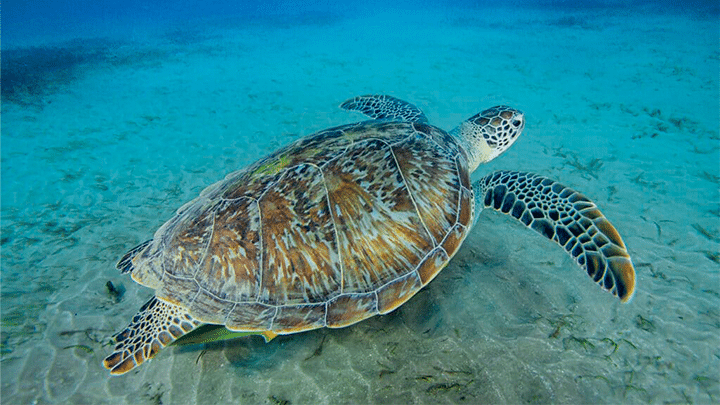
Often it’s the images. It’s the strangest thing that I found over the years; I’d start film scores really early off on the basis of a script, and then the first rushes will come in and the way the film looks, the way that the camera moves or the speed of the edit suddenly changes everything. And with something like the ocean, with these incredible, beautiful shots with the light glimmering it just made you feel that the music needed to sound a certain way, and it needs to shimmer and move. Lots of the work I did with with Lisa on the vocals are these continuous, evolving lines that she does, and it just felt like the music needed to match that sense of movement on the screen.
What do you hope that audiences receive through your work and through Ocean In Concert?
My experience of [Ocean] was that I didn’t know much about this. I’ve worked on a lot of Natural History documentaries, but the ocean is such a mysterious place, and I had no idea of the influence it had on everything else all around the world. I had no idea of the damage that was being done. I’d heard the word “trawler”, but I had no idea what it was, what it was doing, and the kind of insanity of it, so I learnt a lot through doing [this project]. And I think that the brilliance of the filmmakers was that they showed that the ocean in its most brutal form, but they also showed the fact that the ocean recovers really quickly. And of all the solutions to the climate problem we’ve got, Ocean shows a really practical one, and it’s something that can make a big difference in a relatively short amount of time.
So my hope is people kind of go through the same learning thing I did. You see what’s happened, but you come out of it thinking, “we should really get on to all of our politicians about this, because this is madness”, you know? Hopefully it’s inspiring. And someone like Sir David, giving his words and saying, “I’ve been watching this for so long, decades and decades and decades, and this is what needs to happen.” I think that’s powerful. We always wanted as many people as possible to see this film. So if the live event enables more people to see it and tell their friends about it, that’s great.
I guess it’s like a call to action.
I think so. I remember going to a screening of it quite early on, and people just having this really emotional response to it. They were visibly angry in places about what was happening, and very sad in places. But also, there was a lot of spirit there by the end. Ultimately, it is a positive message.
When people are angry in certain places and sad in certain places, is that something that you’re very cognisant of when you’re creating the score?
Yeah, and we wanted a really honest musical response to what was on the screen. So if things are brutal, then the music sounds pretty brutal. If things are sad, it sounds very desolate. We didn’t shy away from from just following the images and the words, and that’s credit to the filmmakers. They wanted this to be as strong as possible. So, it was a tricky thing to write, but really satisfying thing to write, because you felt that the pictures and the music came together to be more than the sum of their parts.

Ocean In Concert comes to 3Arena, Dublin on Saturday 7 March. Get tickets here